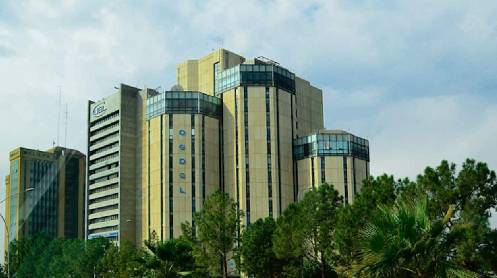
Pakistan’s state-owned Oil & Gas Development Company Limited (OGDCL) is preparing a major expansion of its unconventional gas programme from early next year, aiming to strengthen domestic production and curb dependence on imported LNG.
Despite Pakistan’s long-recognised potential in tight and shale gas, commercial-scale output has yet to materialise. However, new seismic and reservoir data have prompted OGDCL to significantly widen its scope. Managing Director Ahmed Lak told Reuters that the company has tripled its tight-gas study area to 4,500 square kilometres. Phase two of the technical evaluation is expected to conclude by the end of January, after which detailed development plans will be finalised.
Lak said OGDCL began with 85 wells, but the “footprint has expanded massively,” and the company’s next five-year plan will look “drastically different.” Early findings show a “significant” tight-gas resource across parts of Sindh and Balochistan, with multiple reservoirs exhibiting promising characteristics.
Shale Programme Fast-Tracked
OGDCL is also accelerating its shale-gas initiative, shifting from one test well to a broader plan involving five to six wells in 2026-27. Lak said each well could deliver flows of 34 million standard cubic feet per day (mmcfd). If successful, the shale development could scale to hundreds — potentially more than 1,000 — wells.
Shale alone could eventually contribute an additional 600 mmcfd to 1 bcf per day of gas supply, though OGDCL will require partners if the pilot proves commercially viable. The company is open to strategic collaborations, including reciprocal arrangements involving acreage swaps abroad.
According to a 2015 US Energy Information Administration study, Pakistan holds an estimated 9.1 billion barrels of technically recoverable shale oil — the largest resource outside China and the United States. A 2022 assessment also noted similarities between parts of the Indus Basin and major North American shale plays, though experts caution that commercial viability will depend on improved geomechanical analysis, greater fracking capacity and adequate water resources.
Offshore Exploration on the Horizon
OGDCL also plans to drill a deep-water offshore well in the Indus Basin in Q4 2026. In October, Turkey’s TPAO — along with PPL, OGDCL and other consortium partners — secured a new offshore exploration block, marking a renewed push into ultra-deep prospects.
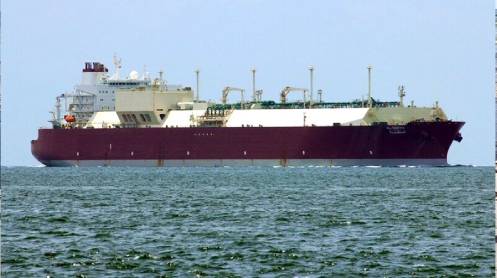
However, the domestic gas landscape is facing short-term challenges. Weak demand, growing solar adoption and a rigid LNG import schedule have resulted in a gas surplus, forcing OGDCL to cut production. Pakistan has also diverted cargoes from Italy’s ENI and is seeking revised LNG supply terms with Qatar.
Despite these challenges, OGDCL’s aggressive pivot toward unconventional gas signals a strategic shift aimed at strengthening long-term energy security and reducing reliance on costly fuel imports.
By Reuters